


The global response to HIV is facing its most serious setback in decades, UNAIDS warned on Tuesday, as abrupt funding cuts and a deteriorating human rights environment disrupt prevention and treatment services across dozens of countries.
A new global report warns that inequality is increasing the worlds vulnerability to pandemics, making them more deadly, more costly and longer lasting and where you live, could determine how badly impacted you are.
The United Nations outlined how it intends to advance one of its most comprehensive system-wide reform efforts in decades, as Under-Secretary-General for Policy Guy Ryder presented theUN80 Initiative Action Plan.The plan brings the Secretary-Generals major UN80 reform proposals into a single, coherent structure to streamline efforts that will make the UN system deliver better.
Launching its 2025World AIDS Dayreport,,UNAIDSsaid international assistance has sharply declined, with OECD projections showing external health funding could fall by3040 per cent in 2025compared with 2023.
The impact has been immediate and severe, especially in low- and middle-income countries highly affected by HIV.
The funding crisis has exposed the fragility of the progress we fought so hard to achieve, said Winnie Byanyima, Executive Director of UNAIDS, who was speaking in Geneva.
Behind every data point in this report are people babies missed for HIV screening, young women cut off from prevention support, and communities suddenly left without services and care. We cannot abandon them.
Prevention services hit hardest
UNAIDS reports widespread disruption to HIV prevention, testing and community-led programmes:
- Across 13 countries, the number of people newly initiated on treatment has fallen.
- Stock-outs of HIV test kits and essential medicines have been reported in Ethiopia and the Democratic Republic of the Congo.
- Distribution of preventive medicines plummeted down31 per cent in Uganda,21 per cent in Viet Nam, and64 per cent in Burundi.
450,000 women in sub-Saharan Africalost access to mother mentors, trusted community workers who link them to care.
- Nigeria recorded a55 per cent dropin condom distribution.
Before the crisis, adolescent girls and young women were already severely affected570 new HIV infections occur every dayamong young women aged 1524. UNAIDS warns that dismantled prevention programmes leave them even more vulnerable.
Community-led organisations, the backbone of HIV outreach, are also under pressure. Over60 per cent of women-led organisationssay they have had to suspend essential services.
UNAIDS modelling now suggests that failure to restore prevention efforts could lead to anadditional 3.3 million new HIV infections between 2025 and 2030.
Human rights reversals deepening risk
The funding crisis is unfolding amid growing restrictions on civil society and a rise in punitive laws targeting marginalised groups most affected by HIV.
For the first time since UNAIDS began tracking such legislation, the number of countries criminalising same-sex relations and gender expression increased in 2025. Globally:
168 countriescriminalise some aspect of sex work
152criminalise small-scale drug possession
64criminalise same-sex relations
14criminalise transgender people
Restrictions on civil society,including onerous registration rules and limits on receiving international assistance, are further undermining access to services.
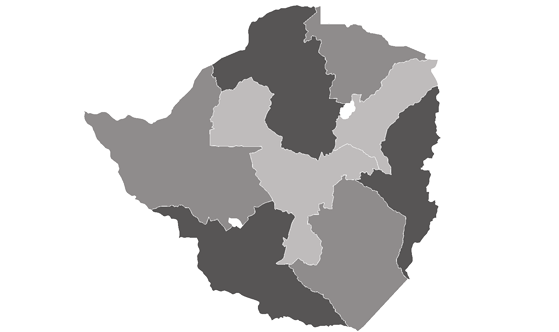
Zimbabwe: People have not stopped needing services theyve lost access
Speaking from Harare, Dr. Byrone Chingombe, Technical Director at the Centre for Sexual Health and HIV/AIDS Research (CeSHHAR), described the real-world impact of funding cuts in Zimbabwe.
2025 has been a hard year, he said. When funding stopped in January, service providers were laid off overnight. Medicines were on the shelves, but the people who deliver them were gone. That disrupted adherence, and more importantly, it disrupted trust.
CeSHHARs HIV testing case finding rates have fallenby more than 50 per cent, a drop he says reflects loss of access, not reduced need. Community-led teams, already overstretched, are trying to fill the gap.
He highlighted two areas of hope: community resilience and new long-acting prevention technologies, including the injectable lenacapavir recently fast-tracked for approval in Zimbabwe and now expected to reach the country in early 2026.
UNAIDS/Cynthia R MatonhodzeA woman living with HIV receives medication at a hospital in Zimbabwe.A call to action
UNAIDS is urging world leaders to:
Reaffirm global solidarity and multilateralism, including commitments made at the recent G20 Leaders Summit in South Africa
Maintain and increase HIV funding, especially for countries most dependent on external assistance
Invest in innovation, including affordable long-acting prevention
Uphold human rights and empower communities, which remain central to successful HIV responses
This is our moment to choose, Ms. Byanyima said. We can allow these shocks to undo decades of hard-won gains, or we can unite behind the shared vision of ending AIDS. Millions of lives depend on the choices we make today.
UNAIDS/Cynthia R MatonhodzeA woman living with HIV receives medication at a hospital in Zimbabwe.